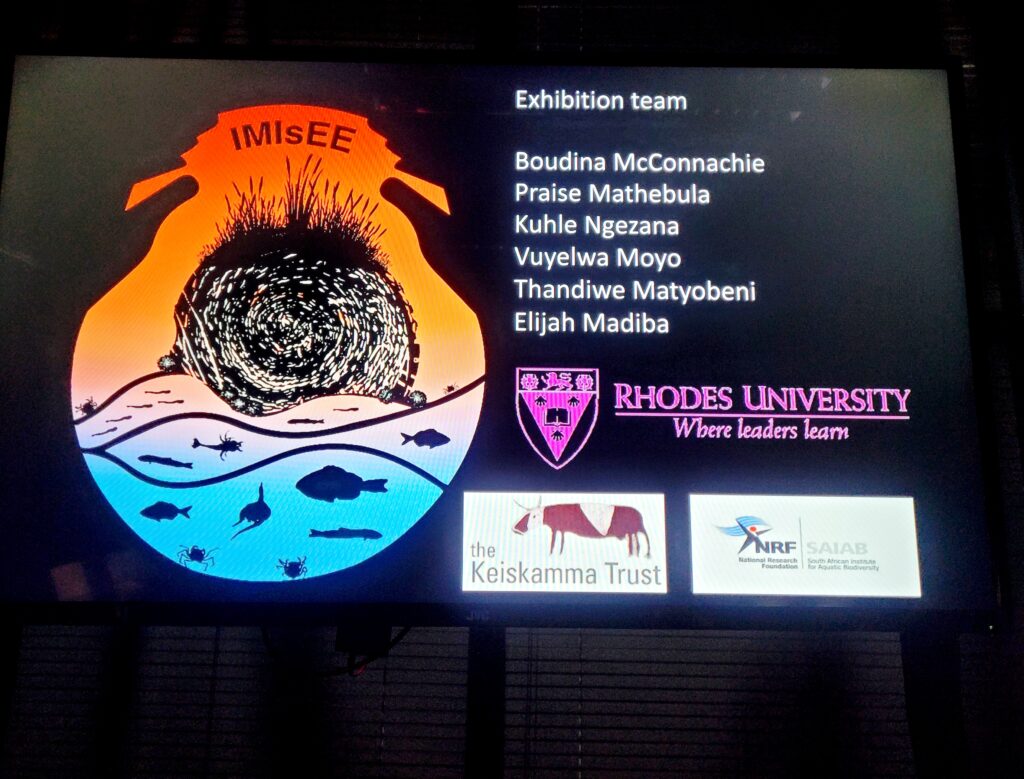
Indigenous Marine Innovations for Sustainable Environments and Economies (IMIsEE) project
Principal Investigators: Boudina McConnachie (RU) and Francesca Porri (SAIAB)
A Sound Postcard Series: The development of the Audio Postcards exhibition
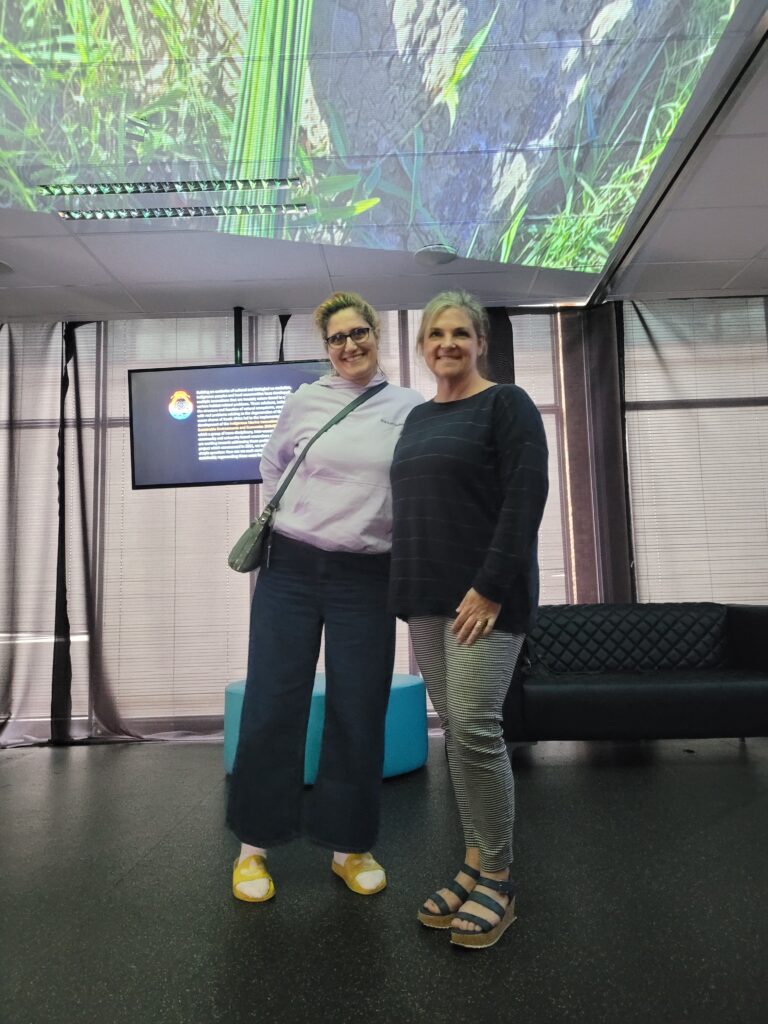
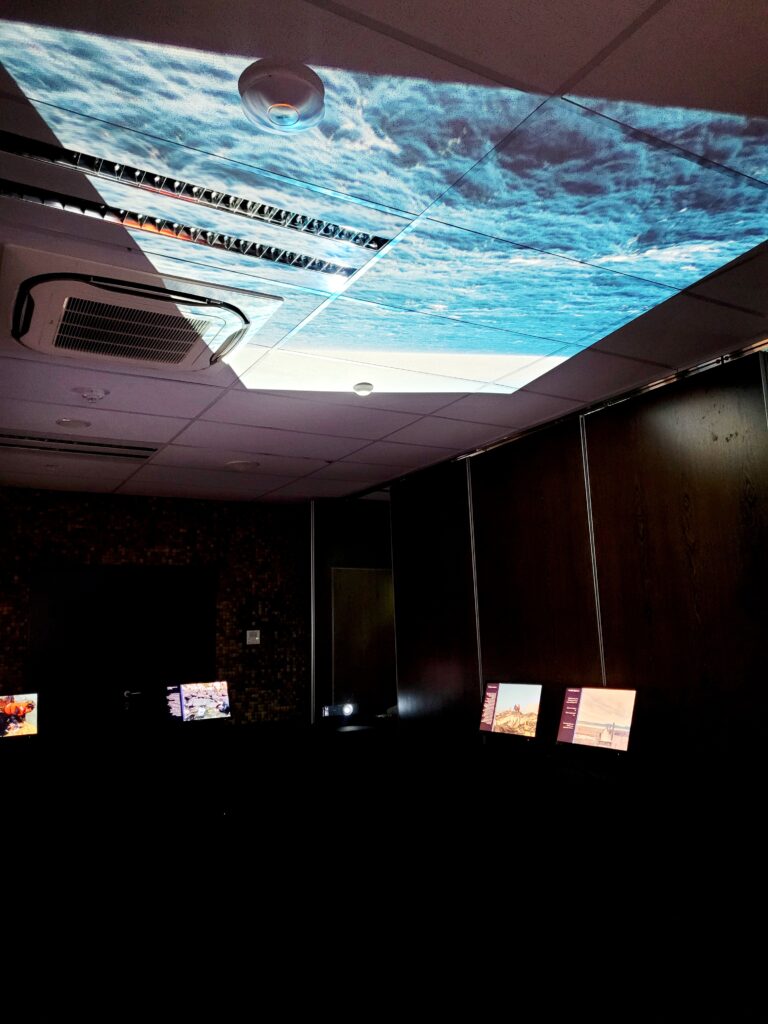
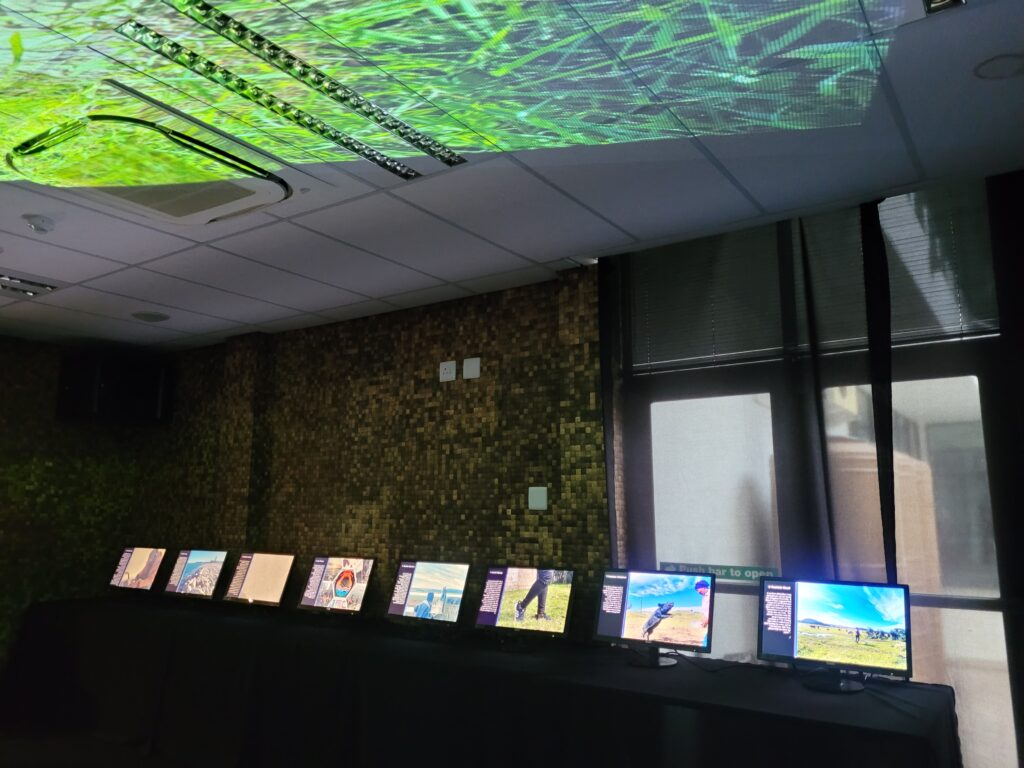
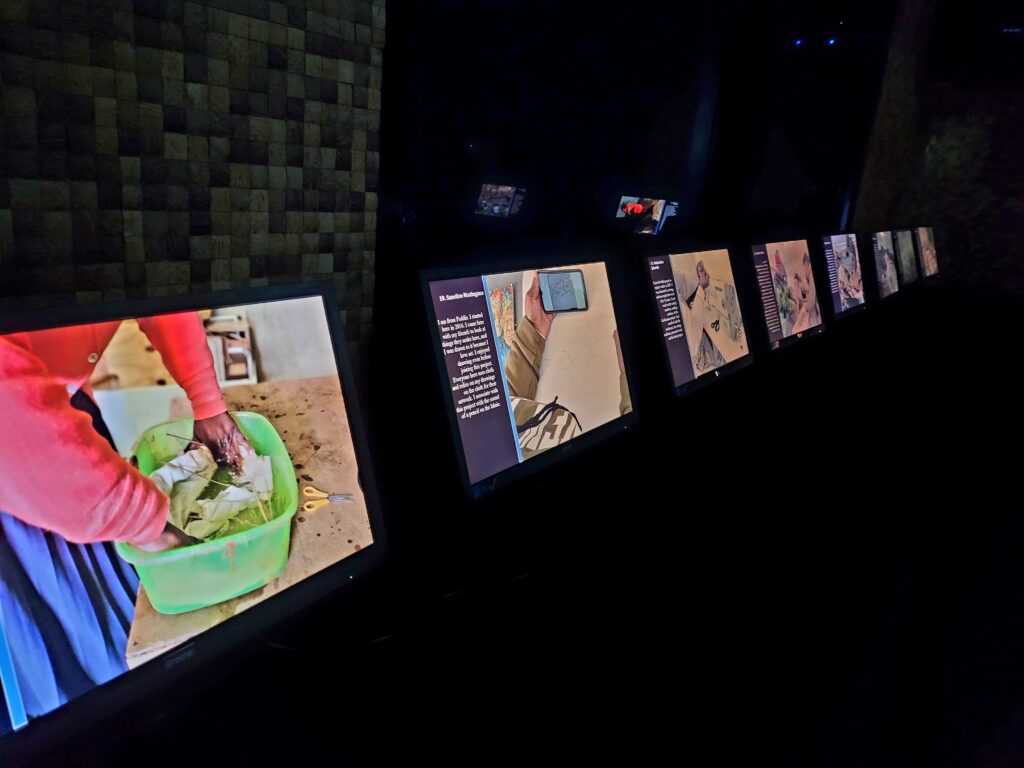
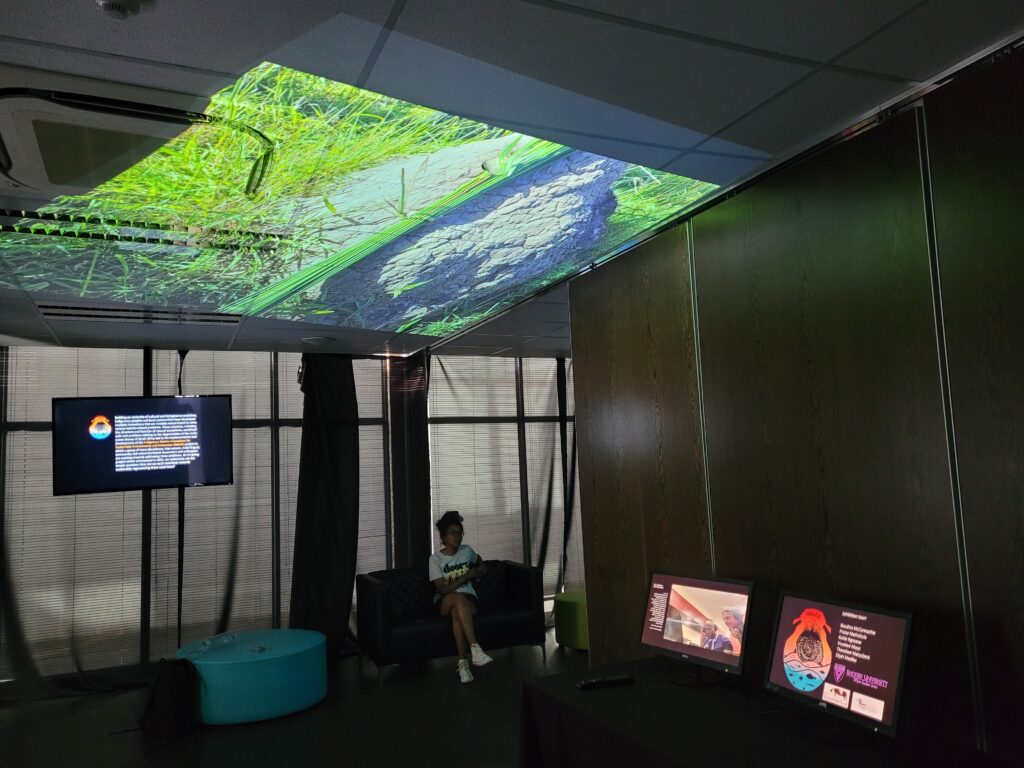
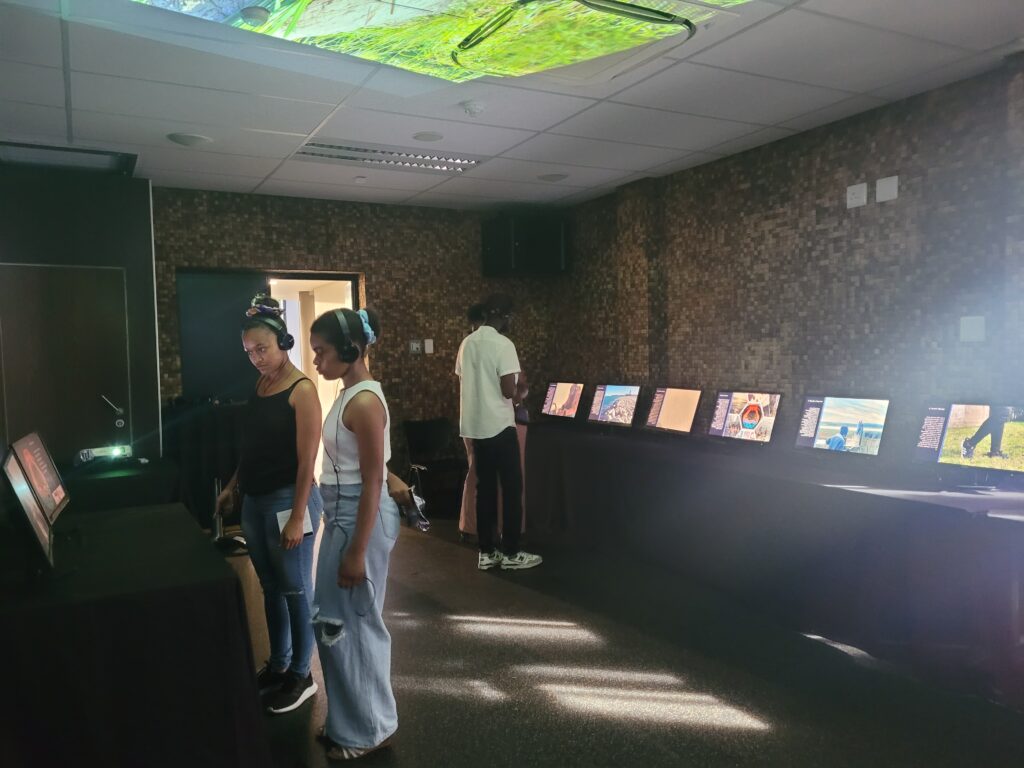
Using headphones for sound and screens for visuals, the Audio Postcard Exhibition is a digital sound-scape presented in a darkened room. Listening through 21 sound offerings, contextualised by a single image, the journey takes approximately 20 minutes to complete. ‘Hearing’ the IMIsEE project offers a new experience for both researchers and audiences to rethink ways of disseminating research, which offers a neutral ground for deeper reflection.
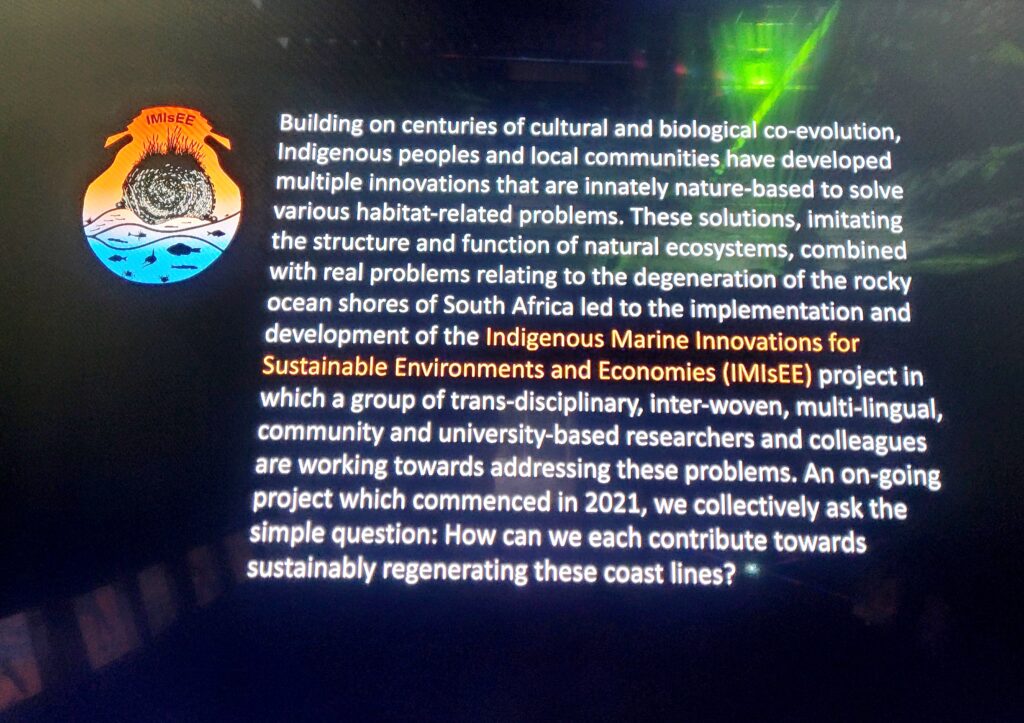
Building upon centuries of cultural and biological co-evolution, Indigenous peoples and local communities have harnessed numerous nature-based innovations to tackle habitat-related challenges. These solutions, which mimic the structure and function of natural ecosystems, combined with real problems relating to the degeneration of the rocky ocean shores of South Africa led to the implementation and development of the Indigenous Marine Innovations for Sustainable Environments and Economies (IMIsEE) project. This research is shared between the Rhodes University Department of Music and Musicology, the South African Institute for Aquatic Biodiversity (SAIAB), and the Keiskamma Trust (KKT). Strong partnerships with the International Library of African Music (ILAM), with support from South African colleagues at the University of Cape Town (UCT) and Nelson Mandela University (NMU) as well as participation of privately- and state-owned regional maritime enterprises provide transdisciplinary support. As an on-going project we collectively ask a fundamental question: How can we each sustainably contribute towards regenerating the degraded coastlines in our region?
Interest in creating socially responsible solutions to ecological problems is key to the research and has led to an approach which includes community engaged, heritage-based, eco-creative solutions. Simply put, we are developing solutions to the coastal degradation of the Eastern Cape coast in South Africa by consulting with local communities who are weaving mat-like structures which scientists are deploying in harbours and on rocky shores. These structures are carefully analysed over a period of months to check for ocean-life regeneration. The plant material used to co-design and manufacture the nature-based structures for this project is the grass-like sedge Cyperus textilis, locally known as imizi. In the rural areas of the Eastern Cape, this fibre is used extensively by artisanal crafters, predominantly women for weaving traditional sleeping and sitting mats, along with crafting baskets and serving trays. Creating these structures requires a combination of Indigenous knowledge and specialised skills and sourcing the weaving structures was done through workshops, where community members learned these skills in an act of revitalisation.
Several workshops were held, where the scientists and weavers experimented together, taking the opportunity to get to know each other and the project goals and aims. These workshops proved to be a rich environment for data collection and therefore a good space to include the ethnomusicologists from ILAM, who recorded stories and spontaneous work songs that took place. These ecomusicological interventions, where traditional cultural expressions (TCEs) were collected, form part of the data that is being collated to create opportunities for transgressive teaching and learning (Allen 2012; Lotz-Sisitka et al, 2015). This important step will ensure that the knowledge gathered through the nature-based scientific aspect of the project remains part of community developed knowledge systems and can be valued as such.
Like Allen (2012), we raise a fundamental question: can the threats posed by human civilisation to ecosystems be co-resolved by the uniquely human disciplines like the arts and music? We emphasise the co, to highlight the importance of the community involvement central to our approach.
As we began to unravel each member’s understanding of the whole project, in discussion with the community of researchers, the use of an artistic output was deemed necessary to find a neutral starting point for data collection, analysis and dissemination. This became a key determinant on the development of a creative intervention using sound or audio postcards. Audio-postcards offer an alternative sonic method of sharing impressions of places, events or thoughts and are digital representations composed of sound and a single visual. Audio postcards include a composition of about one to two minutes in length which has been created using recorded sounds. These sounds can be natural environmental sounds, human-made sounds, or spoken words and can be composed and identified as a song or left in a raw state to be identified as a sound-scape.
A Sound Postcard Series has created opportunities for scientists, community members and artists to engage with their research and knowledge products in a novel way, allowing them to ‘hear’ the project. The audio postcards reflect not only the heritage and environment of the IMIsEE project, but the diverse backgrounds and ontologies of the communities too. Each member of the research team (scientists, community weavers, grass collectors, representatives from the maritime industry and artists, as well as the ecomusicology team) was asked to record a short sound byte which they believe explains how they personally relate to the project. We held workshops for each group where we presented the concepts of the audio-postcards and then instructed those with their own audio-visual devices (such as mobile-phones) how to go about recording their offerings.
The specific outcomes developed for this creative output were to:
1. Explore the potential of the anarchive as a way to document the interventions and research taking place in the IMIsEE project;
2. Enhance this research with new recordings and create new sound-based displays grounded on issues of coastal and environmental change;
3. Develop a new collaborative sound methodology involving researchers, creators, community members and facilitators;
4. Create debate and discussion relating to the human and environmental challenges faced by coastal communities in South Africa and beyond through exhibiting the ‘sonic postcard’ series.