
Professor Ingrid Schudel, Environmental Learning Research Centre, Rhodes University Education Faculty
Amazwi South African Museum of Literature
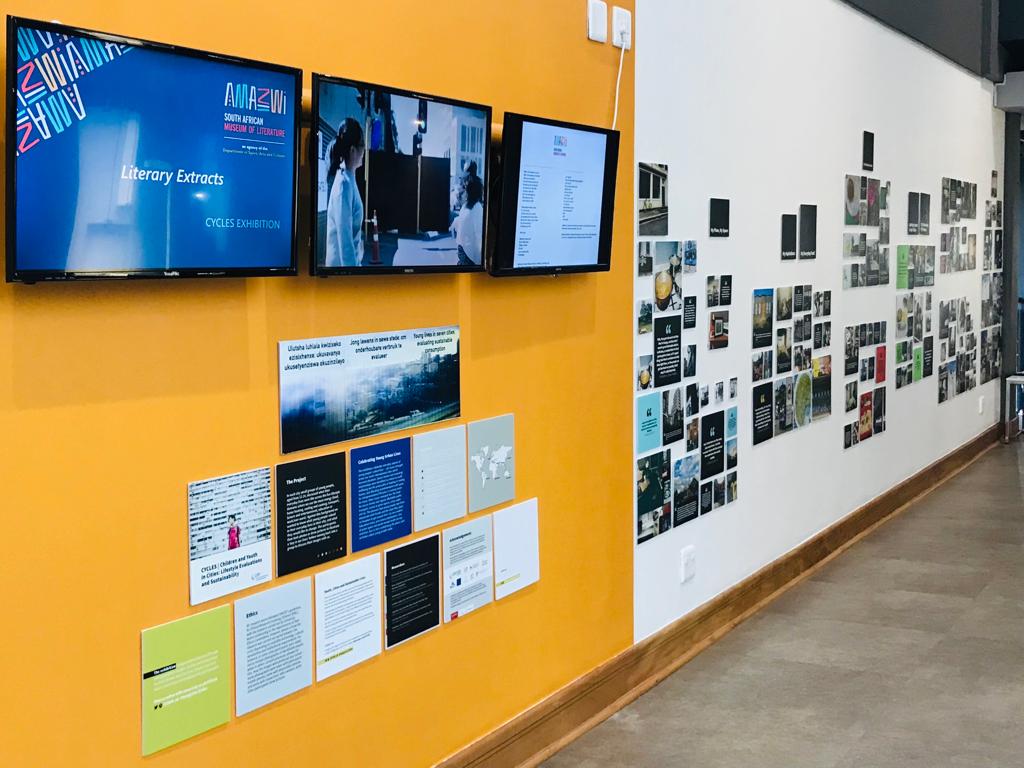
Through the Environmental Learning Research Centre at Rhodes University Education Faculty, Amazwi was approached by the Centre for the Understanding of Sustainable Prosperity (CUSP) to host and co-curate a traveling exhibition titled ‘Cycles: Young Lives in Seven Cities’. The cities involved are Christchurch (New Zealand), Dhaka (Bangladesh), London (United Kingdom), New Delhi (India), Sao Paulo (Brazil), Yokohama (Japan) and Makhanda. The exhibition has toured the other 6 cities and is now to come to Makhanda.
This is the introduction to the project from the CUSP website:
In our CYCLES research we have been listening to young people around the world talk about their everyday lives, including what they like about where they live and what they might like to change. We wanted to understand the possibilities for young people to live flourishing urban lives in sustainable ways. To do this, our research teams spoke with young people aged 12-24 in seven very different cities – Lambeth in London UK, Christchurch in New Zealand, Dhaka in Bangladesh, New Delhi in India, São Paulo in Brazil, Grahamstown in South Africa and Yokohama in Japan.
We asked them to tell us about the kind of food they eat and where they get it from, about how they get around their city and away, how they spend their leisure time, what their home life is like, and about work and school. We also asked them to take photos and make drawings to illustrate their stories and we will be sharing these images in the form of an exhibition.
The narratives and photographs detailing the lived experience of South African and international youth in a challenging world are partnered with relevant South African literature and materials from the Amazwi collections. Education programmes will be aligned with the exhibition.
The focus on issues of food security and sustainability and the futures of young people in a time of social-ecological crisis aligns with Amazwi’s position as the leader in the implementation of sustainable museum practice in South Africa. There is potential for Amazwi to become an international leader in this regard as the focus on sustainable practice and social-ecological responsibility is rapidly emerging as a cornerstone of a reimagined international museum practice.