
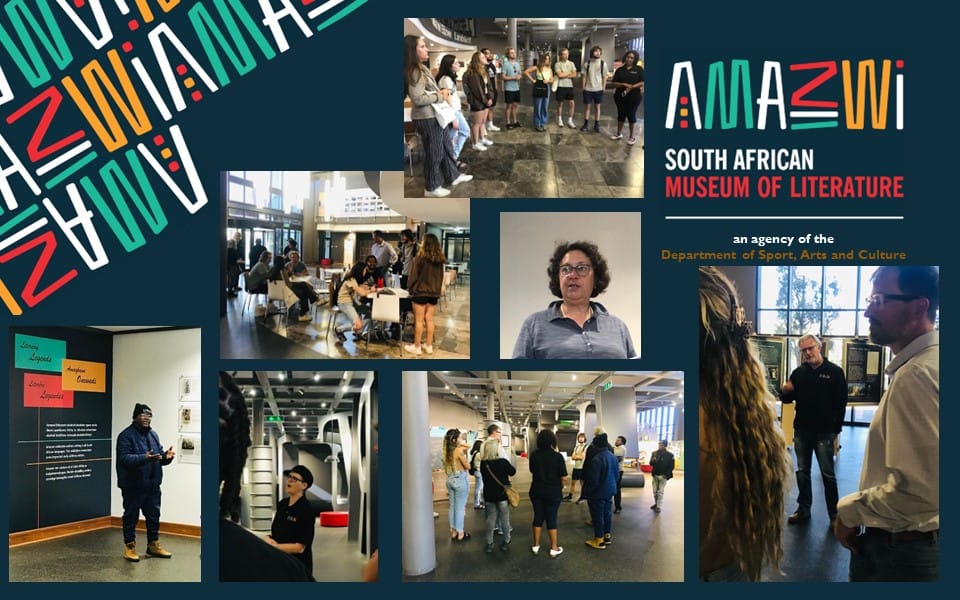
The Director of the museum, Beverley Thomas gave an introduction on the building and its environmentally friendly features. The following is a snippet of her address:
The design of the building is based on freeform curves, which are echoed in the landscaping and the exhibitions.
The multi-storey design minimises the ecological footprint of the building: 5 000 square metres of occupied space on a footprint of 4 000 square metres on a site of 2.7 hectares. The architect’s design maintains a visual connection to the existing built environment. The locally quarried stone cladding and gabions on the building are functionally a passive design strategy to regulate indoor temperature, but aesthetically draw cues from local historical buildings.
The collections’ storage facilities are underground. The subsurface basement is constructed as a continuous concrete slide to ensure absolute water-tightness. It has a ‘green’ roof, minimising natural fluctuations in temperature, which reduces energy use in controlling humidity. This section of the building is an isolated zone with a nitrogen and argon fire suppression system. Temperature and humidity control is powered by a generator during power outages. Drains below ground channel any residual moisture below the building into the storm water system. In the old building the collections’ storage areas were routinely fumigated. When we moved the collections they were professionally fumigated off-site with the goal of never having to fumigate indiscriminately again. Equipment for low temperature treatment has been installed and an integrated pest management strategy based on prevention has been implemented.
In the main exhibition gallery, an open grid carries lighting and audio-visual services to various parts of the exhibitions, above which are clerestory windows. Large windows in the children’s area provide natural light but are filtered by a 90% solar shield to reduce glare, heat gain and prevent ultraviolet light from reaching the exhibitions. The exhibitions are lit with LED lights. A smaller gallery in the centre of the building with no natural light and LED lighting controlled to 40 lux is used for displaying fragile paper artefacts. The materials used for the construction of exhibition furniture and accessories are to the same standard of materials as the building. Office furniture was sourced from a supplier registered as a member of the GBCSA.
An important feature is the garden. Makhanda is situated on the convergence of four biomes: Albany Thicket, Fynbos, Savanna Grassland and Nama Karoo. Applying the principles of xeriscape landscaping, the garden is planted to show the different biomes and growing conditions. Educational programmes on landscaping have been developed that teach about water conservation, medicinal plants and plants in folklore. This is one of the ways that has allowed indigenous knowledge systems and intangible cultural heritage to be merged into literary museum programmes.
Sustainability has been integrated into the daily activities of the museum. This includes reducing waste, recycling and reusing, using non-toxic cleaning materials and taking suppliers’ sustainability credentials into account when making purchasing decisions.
We also thank Amazwi staff for organizing and giving the students the tour around the museum.